
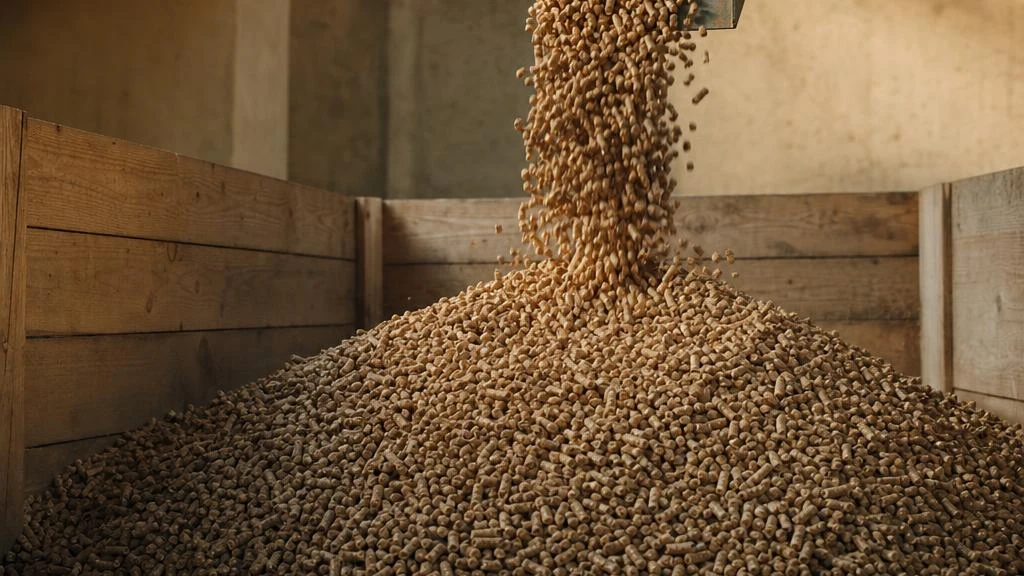
RENEWABLE FUEL BUILT FROM RESOURCE DISCIPLINE.
AT Corporation is developing Wood Pellet as a renewable-fuel business focused on connecting suitable feedstock, processing capability, product specification and commodity-market requirements.
The business is structured around disciplined resource sourcing, product quality, logistics and industrial demand.
FROM RENEWABLE FEEDSTOCK TO INDUSTRIAL FUEL.
Wood Pellet represents a potential renewable-fuel platform within AT Corporation’s Energy & Renewables business.
The opportunity is built around the ability to connect suitable renewable feedstock with controlled processing, consistent product specification and commercially relevant market access.
RESOURCE. PROCESSING. MARKET.
RENEWABLE FEEDSTOCK
Wood Pellet can convert suitable renewable biomass resources into a standardized solid-fuel product.
INDUSTRIAL ENERGY APPLICATION
Pelletized biomass can serve industrial energy applications where technical, regulatory and commercial requirements are appropriate.
PROCESSABLE COMMODITY
Processing can improve consistency, density, handling characteristics and logistics efficiency compared with untreated feedstock.
TRADEABLE PRODUCT
Standardized physical characteristics can support broader commodity-market participation where product specifications and buyer requirements are aligned.
FROM FEEDSTOCK TO FINISHED FUEL.
THE PRODUCT STARTS WITH THE FEEDSTOCK.
NOT ALL BIOMASS MAKES THE SAME PRODUCT.
PHYSICAL CHARACTERISTICS
Evaluate feedstock properties according to processing and product requirements.
MOISTURE
Moisture influences drying requirement, process efficiency and final product quality.
ASH & CONTAMINATION
Feedstock quality must be controlled to limit unwanted ash, mineral content and contamination.
SUPPLY CONSISTENCY
Commercial-scale production requires reliable feedstock availability over time.
CONTROL THE PROCESS. CONTROL THE PRODUCT.
A COMMODITY NEEDS A SPECIFICATION.
AT Corporation is preparing technical information to support future product specifications, including:
- Diameter
- Length
- Moisture
- Ash
- Gross Calorific Value
- Net Calorific Value
- Bulk Density
- Mechanical Durability
- Fines
- Sulfur
- Chlorine
- Nitrogen
- Volatile Matter
CONSISTENCY BEFORE MARKET ACCESS.
Quality-management measures are being prepared for potential future operations across key control points:
MARKET ACCESS DEPENDS ON COMPLIANCE.
Product and sourcing requirements may vary by market and intended application. Preparation for these requirements does not mean AT Corporation is certified.
QUALITY MUST SURVIVE STORAGE.
Product-handling measures are being prepared for potential future operations, including:
DENSITY MATTERS WHEN PRODUCT MOVES.
Pelletization can increase bulk density and improve handling characteristics compared with loose biomass feedstock, supporting more efficient storage and transportation where appropriate. Logistics requirements are being evaluated across:
PRODUCT VALUE DEPENDS ON DELIVERY.
Renewable commodities require reliable physical logistics between production, storage and receiving markets.
EXPLORE MARINE LOGISTICSBUILT AROUND INDUSTRIAL ENERGY DEMAND.
THE MARKET DEFINES THE PRODUCT.
Wood Pellet development must begin with a clear understanding of the technical, logistical and commercial requirements of the intended market.
RENEWABLE FUEL BEGINS WITH NATURAL RESOURCES.
AT Corporation’s Agriculture & Forestry platform may create strategic connectivity with renewable feedstock development where sourcing, resource suitability and responsible-development requirements are aligned.
EXPLORE AGRICULTURE & FORESTRYWOOD PELLET IS ONE FORM OF BIOMASS VALUE CREATION.
Wood Pellet represents one potential product pathway within a broader biomass-resource platform.
EXPLORE BIOMASSFROM PRODUCT SPECIFICATION TO COMMERCIAL MARKET.
The Group’s specialized commodity-trading platform provides a commercial route through which verified renewable-commodity opportunities may be connected to appropriate markets.
EXPLORE COMMODITY TRADINGRESOURCE FIRST. MARKET FIRST. CAPITAL AFTER.
RESOURCE VALIDATION
Confirm reliable feedstock availability, characteristics and sourcing requirements.
PRODUCT VALIDATION
Determine whether the feedstock can be processed into the required product specification.
MARKET VALIDATION
Confirm technical demand, logistics, commercial structure and customer requirements.
PROJECT DEVELOPMENT
Commit capital only after resource, technical and market requirements are sufficiently aligned.
RENEWABLE DEPENDS ON HOW THE RESOURCE IS SOURCED.
Renewable-fuel development requires disciplined consideration of feedstock origin, land responsibility, supply-chain integrity and environmental requirements. Future development will be guided by:
BIOMASS PROCESSING REQUIRES CONTROL.
Process-safety measures are being prepared to manage risks inherent in biomass processing, including:
- Dust Control
- Fire Prevention
- Explosion Risk Management
- Temperature Monitoring
- Material Handling
- Machine Guarding
- Housekeeping
- Emergency Response
- Operator Competency