
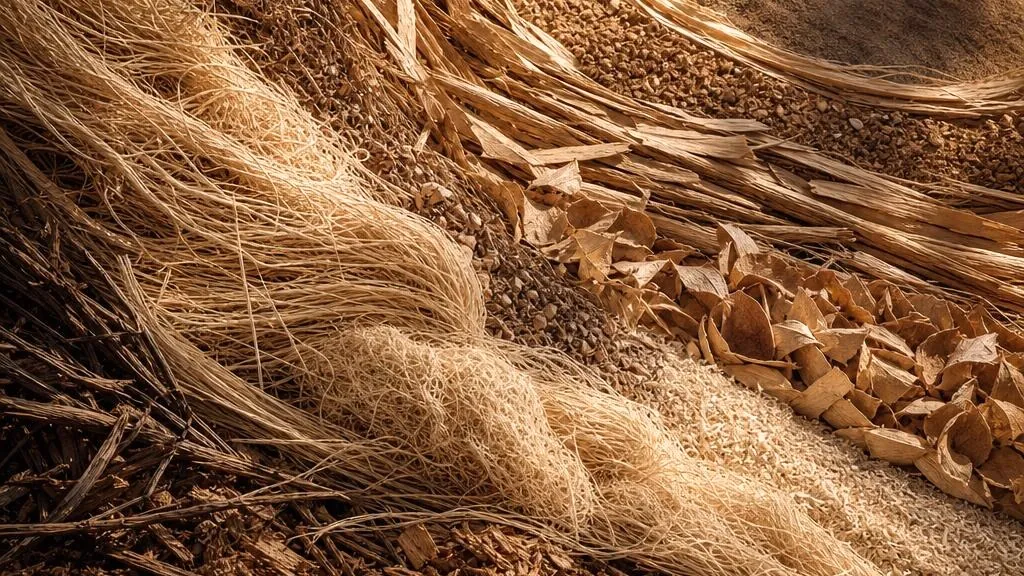
CREATING VALUE FROM RENEWABLE BIOLOGICAL RESOURCES.
AT Corporation is developing Biomass as a broader renewable-resource platform connecting suitable biological feedstocks with processing, energy applications, logistics and commodity markets.
The business is structured around resource suitability, supply consistency, processing requirements and commercial demand.
ONE RESOURCE CATEGORY. MULTIPLE VALUE PATHWAYS.
Biomass represents a broad renewable-resource category capable of supporting multiple energy and industrial applications depending on feedstock characteristics and processing requirements.
AT Corporation’s Biomass strategy focuses on identifying commercially relevant resource streams that can be developed into appropriate products and connected with market demand.
VALUE CAN BEGIN WITH WHAT THE RESOURCE PRODUCES — AND WHAT IT LEAVES BEHIND.
WOOD & FORESTRY RESIDUE
- Wood Residue
- Wood Chips
- Sawmill Residue
- Forestry Residue
- Branches / Offcuts
AGRICULTURAL RESIDUE
- Crop Residue
- Processing Residue
- Fiber Residue
- Other verified agricultural biomass
COCONUT BIOMASS
- Coconut Shell
- Coconut Husk
- Coconut Fiber Residue
- Processing Residue
PALM BIOMASS
- Palm Kernel Shell
- Empty Fruit Bunch
- Fiber
- Other approved palm residue
KENAF BIOMASS
- Stem Residue
- Fiber Processing Residue
- Other technically appropriate material
OTHER APPROVED BIOMASS
- Other verified biomass feedstocks, where appropriate
RESIDUE FIRST. DEDICATED RESOURCE WHERE JUSTIFIED.
NOT ALL BIOMASS HAS THE SAME VALUE.
AVAILABILITY
Evaluate whether feedstock can be sourced consistently at commercially relevant scale.
MOISTURE
Moisture content influences drying requirements, handling and processing efficiency.
ENERGY CONTENT
Energy characteristics determine suitability for different fuel and industrial applications.
ASH
Ash quantity and composition can influence combustion performance, equipment requirements and product suitability.
BULK DENSITY
Bulk density affects transportation, storage and handling economics.
LOGISTICS
Resource value must be assessed together with collection, transport and storage requirements.
FROM RESIDUE TO COMMERCIAL RESOURCE.
THE PROCESS DEPENDS ON THE PRODUCT.
MINIMAL PROCESSING
- Drying
- Sorting
- Size Reduction
DENSIFICATION
- Briquetting
- Pelletizing
THERMAL PROCESSING
- Carbonization
- Torrefaction
- Pyrolysis
Potential future processing
IMPROVE THE PRODUCT BEFORE MOVING IT.
Drying, size reduction and densification can improve handling and logistics characteristics where the additional processing cost is commercially justified.
ONE FEEDSTOCK CAN CREATE DIFFERENT PRODUCTS.
DATA DEFINES THE RESOURCE.
RESOURCE VARIABILITY MUST BE CONTROLLED.
BIOLOGICAL MATERIAL CHANGES IF IT IS NOT CONTROLLED.
A CHEAP FEEDSTOCK CAN BECOME EXPENSIVE TO MOVE.
Biomass economics are highly sensitive to collection distance, bulk density, moisture, handling requirements and transportation mode.
BIOMASS IS THE RESOURCE PLATFORM. WOOD PELLET IS ONE PRODUCT.
BIOMASS
WOOD PELLET
Wood Pellet represents one densified renewable-fuel pathway within AT Corporation’s broader Biomass platform.
EXPLORE WOOD PELLETBIOMASS CAN EMERGE FROM MULTIPLE RESOURCE PLATFORMS.
AT Corporation’s Agriculture & Forestry platform may create strategic connectivity with Biomass where residues or renewable feedstocks satisfy sourcing, technical and commercial requirements.
FROM BIOMASS RESOURCE TO COMMERCIAL MARKET.
PT Biomass Energi Niaga Kalimantan provides AT Corporation with a specialized commercial platform for biomass and renewable commodities.
The company provides a commercial route through which verified biomass opportunities may be connected with appropriate buyers, offtakers and markets.
RESOURCE VALUE DEPENDS ON THE END USE.
THE END USER DEFINES THE REQUIREMENT.
Biomass should be developed around the technical and operating requirements of the intended customer rather than treated as a generic commodity.
RESOURCE. LOGISTICS. PRODUCT. MARKET.
RESOURCE MAPPING
Identify potential feedstock streams and their geographic concentration.
TECHNICAL CHARACTERIZATION
Determine physical, chemical and energy characteristics.
LOGISTICS ASSESSMENT
Evaluate collection, storage, processing and delivery requirements.
PRODUCT SELECTION
Select the most appropriate commercial product pathway.
MARKET VALIDATION
Confirm customer specification, demand and commercial structure.
PROJECT DEVELOPMENT
Commit capital only when resource, logistics, product and market requirements are sufficiently aligned.
BIOLOGICAL RESOURCES DO NOT ALWAYS ARRIVE EVENLY.
RENEWABLE RESOURCE VALUE STARTS WITH SOURCE INTEGRITY.
Biomass development requires clear understanding of feedstock origin, land legality, existing resource use and environmental implications.