
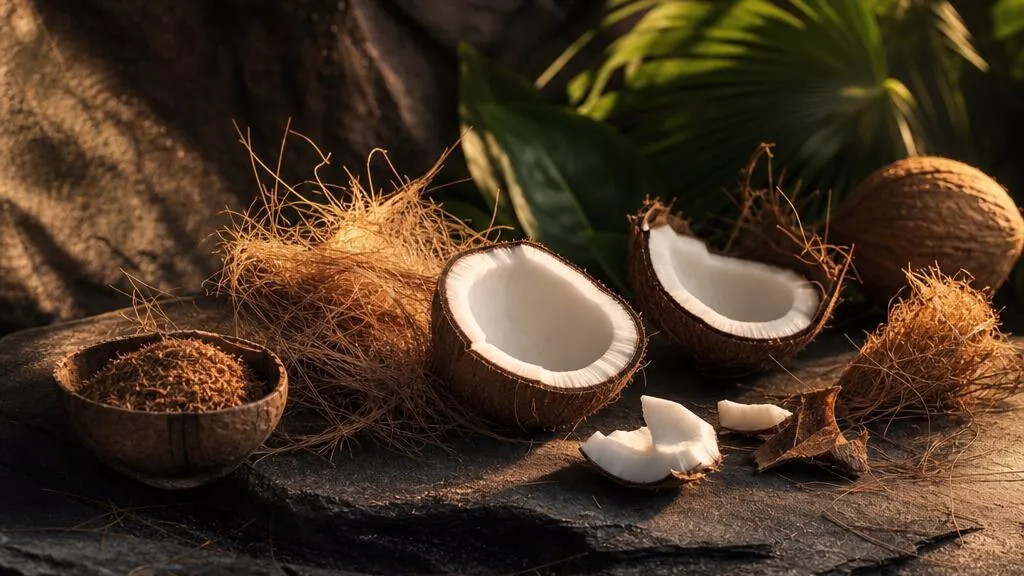
ONE RESOURCE. MULTIPLE VALUE STREAMS.
AT Corporation is developing Coconut as a diversified agricultural-resource platform with potential applications across food, oils, industrial materials, renewable feedstocks and commodity markets.
The business is structured around resource availability, product development, processing potential and commercial market access.
MORE THAN A PRIMARY COMMODITY.
Coconut provides a broad agricultural-resource platform because different parts of the resource can support food, industrial and renewable-energy applications.
AT Corporation’s Coconut strategy is focused on developing commercially relevant product pathways from the primary resource through processing, derivatives and market connectivity.
VALUE ACROSS THE WHOLE RESOURCE.
FOOD & OIL PRODUCTS
INDUSTRIAL MATERIALS
SHELL & FIBER PRODUCTS
RENEWABLE FEEDSTOCK
FROM RESOURCE TO MULTIPLE MARKETS.
THE VALUE CHAIN STARTS WITH CONSISTENT RESOURCE.
COPRA.
Copra represents a primary processed coconut product that can serve as a feedstock for coconut-oil production and commodity markets.
- Moisture ·
- Oil Content ·
- Quality Grade ·
- Drying Method ·
- Contamination ·
- Storage ·
- Market
COCONUT OIL.
Coconut oil represents a higher-value processing pathway with applications across food, industrial and downstream product markets.
- Crude Coconut Oil ·
- Refined Coconut Oil ·
- Other Approved Grades
VIRGIN COCONUT OIL.
Virgin Coconut Oil represents a differentiated coconut-oil product requiring tighter raw-material, processing and quality control.
- Moisture ·
- Free Fatty Acid ·
- Appearance ·
- Odor ·
- Microbiological Requirements ·
- Packaging ·
- Storage ·
- Certification
THE SHELL IS ALSO A RESOURCE.
FROM HUSK TO FIBER VALUE.
RESIDUE CAN BECOME AN ENERGY RESOURCE.
Coconut processing may generate shell, husk and other residue streams that can create renewable-feedstock opportunities where technical and commercial conditions are appropriate.
VALUE THE PRIMARY PRODUCT. THEN VALUE THE BY-PRODUCT.
THE PRODUCT DETERMINES THE PROCESS.
POTENTIAL DEVELOPMENT AREASDIFFERENT PRODUCTS. DIFFERENT SPECIFICATIONS.
QUALITY CONTINUES AFTER PROCESSING.
RESOURCE VALUE DEPENDS ON DELIVERED COST.
Coconut economics depend on the relationship between resource location, processing location, product density, storage requirements and market distance.
FROM AGRICULTURAL RESOURCE TO COMMERCIAL MARKET.
ONE RESOURCE. DIFFERENT CUSTOMERS.
CAPTURE MORE VALUE WHERE THE ECONOMICS SUPPORT IT.
AT Corporation’s strategy is to evaluate downstream opportunities where processing can create commercially meaningful value without adding disproportionate operating complexity or capital intensity.
RESOURCE. PROCESS. PRODUCT. MARKET.
RESOURCE MAPPING
Identify commercially relevant coconut-resource concentrations.
SUPPLY VALIDATION
Assess availability, seasonality, quality and sourcing structure.
PRODUCT SELECTION
Determine the most appropriate product pathways for the available resource.
PROCESSING ASSESSMENT
Evaluate technology, operating complexity, capital requirements and product yield.
MARKET VALIDATION
Validate customer specification, logistics and commercial conditions.
PROJECT DEVELOPMENT
Commit capital after resource, processing and market requirements are sufficiently aligned.
PRODUCTIVE RESOURCES REQUIRE DISCIPLINED SOURCING.
- Land Legality
- Supplier Verification
- Farm / Resource Origin
- Environmental Management
- Water
- Waste / Residue
- Community Considerations
- Supply Chain Traceability