
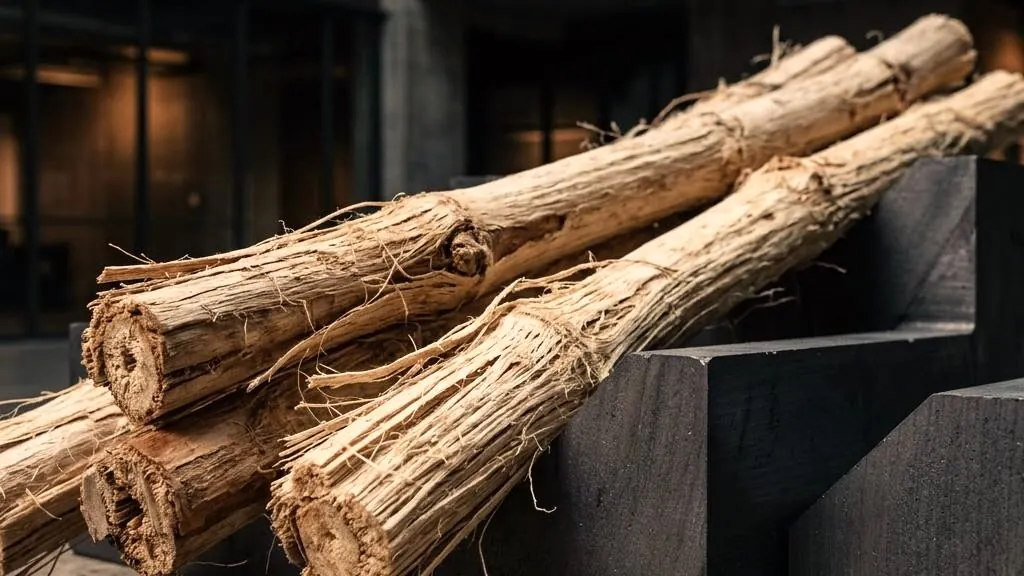
FIBER FOR INDUSTRIAL APPLICATIONS.
AT Corporation is developing Kenaf as an industrial-fiber platform with potential applications across pulp, paper, packaging, composites and selected building materials.
The business is structured around resource productivity, fiber quality, processing capability and industrial market demand.
FROM CROP TO INDUSTRIAL MATERIAL.
Kenaf is a fast-growing fiber crop with potential to serve multiple industrial-material applications depending on fiber quality, processing technology and customer requirements.
AT Corporation’s Kenaf strategy focuses on developing commercially relevant pathways from cultivation and fiber separation through industrial processing and market access.
ONE PLANT. MULTIPLE MATERIAL STREAMS.
BAST FIBER
CORE MATERIAL
PULP & PAPER
COMPOSITES & BUILDING MATERIALS
FROM FIELD TO MATERIAL MARKET.
FIBER QUALITY STARTS WITH THE RESOURCE.
SEPARATE THE MATERIAL BEFORE CREATING VALUE.
INDUSTRIAL APPLICATIONS DEPEND ON FIBER CHARACTERISTICS.
FIBER TO PULP AND PAPER.
Kenaf fiber may support pulp and paper applications where fiber characteristics, pulping technology and product requirements are appropriately matched.
FIBER FOR PACKAGING SYSTEMS.
NATURAL FIBER AS AN INDUSTRIAL INPUT.
FIBER BEYOND PAPER.
FIBER PRODUCTION CAN ALSO CREATE RENEWABLE FEEDSTOCK.
Kenaf processing may generate secondary material streams that can create Biomass opportunities where technical and commercial conditions are appropriate.
HIGHER-VALUE MATERIAL FIRST. SECONDARY USE AFTER.
MATERIAL VALUE DEPENDS ON APPLICATION FIT.
A MATERIAL IS NOT A PRODUCT UNTIL THE CUSTOMER CAN USE IT.
MATERIAL CONVERSION SYSTEMS.
CONTROL MOISTURE. PROTECT FIBER QUALITY.
LOW-DENSITY MATERIAL REQUIRES LOGISTICS DISCIPLINE.
Natural-fiber economics can be highly sensitive to bulk density, baling, processing location and transportation distance.
INDUSTRIAL COMMERCIAL ROUTING.
COMMERCIAL PATHWAYS VARY BY PRODUCT AND APPROVED COMMERCIAL MANDATE.
This commercial connection applies only to appropriate renewable feedstock/biomass streams. Do not route primary industrial fiber through the renewable trading arm by default.
RESOURCE. FIBER. PROCESS. APPLICATION.
RESOURCE VALIDATION
Confirm cultivation, resource availability and supply economics.
FIBER CHARACTERIZATION
Understand physical, chemical and mechanical properties of the material.
PROCESSING TRIAL
Determine appropriate separation and material-processing pathways.
APPLICATION DEVELOPMENT
Match fiber characteristics with suitable industrial applications.
CUSTOMER VALIDATION
Conduct technical and commercial validation with potential end users.
PROJECT DEVELOPMENT
Commit capital only after resource, processing and market requirements are sufficiently aligned.