
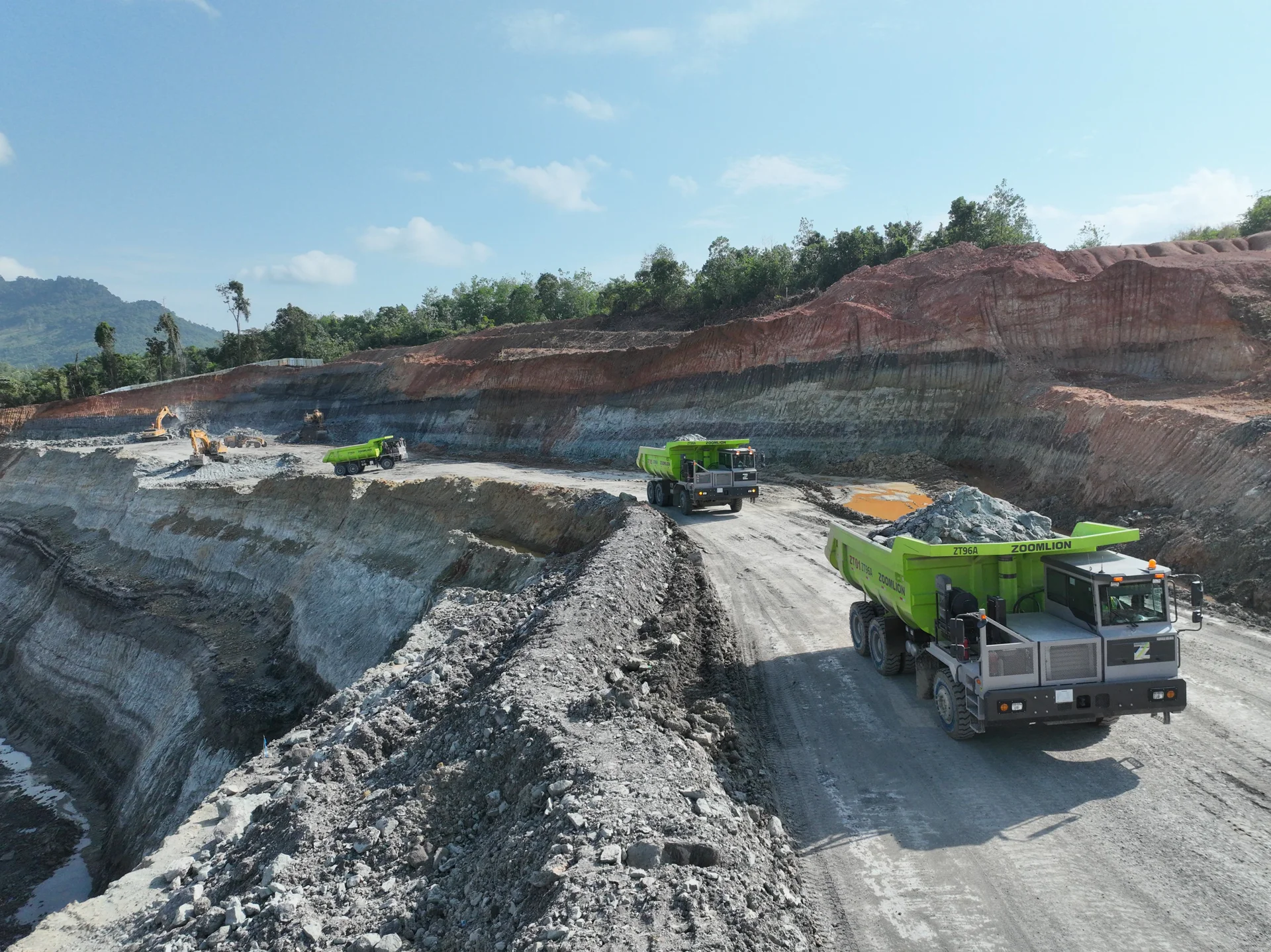
MOVING MATERIAL WITH CONTROL.
AT Corporation’s coal-hauling capability is structured to support the disciplined movement of bulk material between mining areas, stockpiles and downstream loading points.
Efficient hauling depends on the alignment of route, fleet, payload, cycle time and operating control.
THE LINK BETWEEN PRODUCTION AND DESTINATION.
Hauling is the operating link between material production and the next stage of the commodity chain.
Effective land logistics requires coordinated fleet deployment, route management, loading discipline, cycle-time visibility and receiving-point coordination.
LOAD. MOVE. DELIVER. RETURN.
LOAD
Coordinate truck positioning, loading sequence and payload according to operating requirements.
MOVE
Transport material through the approved route with appropriate traffic, safety and operating controls.
DELIVER
Deliver material to the designated stockpile, handling or loading point.
RETURN
Manage return movement and fleet circulation to support stable cycle performance.
EVERY ROUTE HAS AN OPERATING PROFILE.
REFERENCE ROUTE TYPES
- MINE TO STOCKPILE
- MINE TO ROM
- STOCKPILE TO JETTY
- STOCKPILE TO PROCESSING
- INTER-SITE MATERIAL MOVEMENT
- OTHER APPROVED BULK ROUTE
ROUTE PROFILE REFERENCE FIELDS
MATCHING FLEET TO THE ROUTE.
FLEET CATEGORIES — OWNERSHIP, BRAND, MODEL, QUANTITY AND PAYLOAD NOT IMPLIED
VISIBILITY ACROSS THE CYCLE.
PERFORMANCE METRIC REFERENCE
CYCLE TIME MODEL
COORDINATING MOVEMENT ACROSS THE ROUTE.
OPERATING CONTROL REFERENCE
THE ROAD IS PART OF THE PRODUCTION SYSTEM.
Hauling productivity depends not only on trucks, but also on road geometry, condition, drainage, traffic management and maintenance discipline.
ROAD-MANAGEMENT ARCHITECTURE — IMPLEMENTATION SUBJECT TO VERIFICATION
REDUCE DELAY. STABILIZE CYCLE. MOVE MATERIAL.
BALANCED FLEET
Match truck deployment with loading capacity and route conditions.
STABLE CYCLE
Reduce unnecessary variation across loading, travel, dumping and return stages.
ROUTE CONDITION
Maintain road conditions appropriate to operating and safety requirements.
QUEUE CONTROL
Reduce excessive waiting at loading and receiving points.
HAULING STARTS WITH MINING COORDINATION.
Land logistics must remain coordinated with excavation, loading and production requirements at the mine.
EXPLORE MINING CONTRACTINGMOVEMENT MUST CONNECT WITH HANDLING CAPACITY.
Hauling performance is linked to the receiving capacity of stockpiles, coal-handling systems and loading facilities.
EXPLORE COAL INFRASTRUCTUREFROM LAND MOVEMENT TO MARINE MOVEMENT.
Where commodity movement continues by water, land logistics must connect effectively with loading points, stockpile management and marine transportation.
EXPLORE MARINE LOGISTICSCONTROL THE ROUTE. PROTECT THE OPERATION.
SAFETY ARCHITECTURE — IMPLEMENTATION SUBJECT TO VERIFICATION
- Driver / Operator Competency
- Speed Management
- Traffic Rules
- Pre-Start Inspection
- Fatigue Management
- Road Inspection
- Emergency Response
- Communication
- Vehicle Condition
MATERIAL MOVEMENT HAS AN ENVIRONMENTAL FOOTPRINT.
ENVIRONMENTAL CONTROL REFERENCE — PERFORMANCE SUBJECT TO VERIFICATION
STRUCTURED AROUND ROUTE AND REQUIREMENT.
COMMERCIAL MODEL REFERENCE